For decades, the prestige beauty sector often equated luxury with material excess: dense multi-layered plastics and next-to-zero supply chain visibility. But as the European Union tightens laws around greenwashing, the definition of prestige is evolving.
Can heritage brands move to a circular supply chain without losing prestige appeal?
The Clarins Case Study
Independent French manufacturer Clarins serves as an excellent case study. By combining blockchain tracking with premium material engineering, the private multinational proves that sustainable logistics can look and feel uncompromisingly luxurious.
Digital Traceability
True supply chain transparency requires real data, not vague corporate sustainability reports. It seems long before sustainability became a marketing mandate, Clarins was operating on an environmental vanguard–not only by eliminating microbeads from its exfoliating products in 2014, for example, but also by launching its blockchain platform in 2022. Clarins implemented full traceability years before the European Union’s upcoming 2028 wastewater and micropollutant deadlines even come into effect, preemptively launching its proprietary Clarins T.R.U.S.T. platform.
Developed alongside the French blockchain startup NeuroChain, the platform utilizes a decentralized database to track raw materials. When a plant extract is harvested at their organic estates (Domaines Clarins) or via global fair-trade channels, a tamper-proof digital record is generated. Customers simply enter a batch code on the packaging to view the information.
This level of structural transparency is becoming an operational necessity as international trade frameworks tighten. As explored in Waterless Beauty and the EU Green Deal, upcoming Extended Producer Responsibility (EPR) mandates under the EU’s Urban Wastewater Treatment Directive will soon force cosmetic manufacturers to account for the exact chemical and preservative weight inside their formulations. By investing early in localized botanical tracking, private companies will bypass compliance penalties.
Elevated Eco-Conscious Packaging
Clarins proves that sustainable packaging doesn’t have to look or feel underwhelming. A prime example is the Skin Illusion All-In-One Concealer. While most concealers are typically packaged in disposable plastic tubes that end up in landfills, Clarins opted for a sleek glass vial and recycled plastic closure.
The innovation extends to the concealer itself. It delivers remarkable, all-day longevity, proving that a shift toward more sustainable packaging can coexist with premier performance.
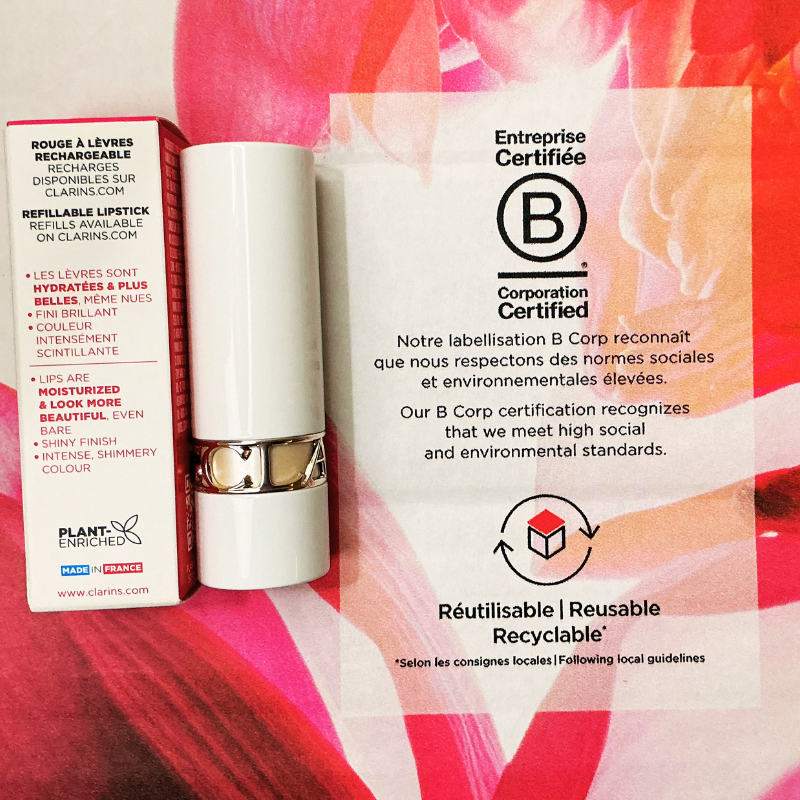
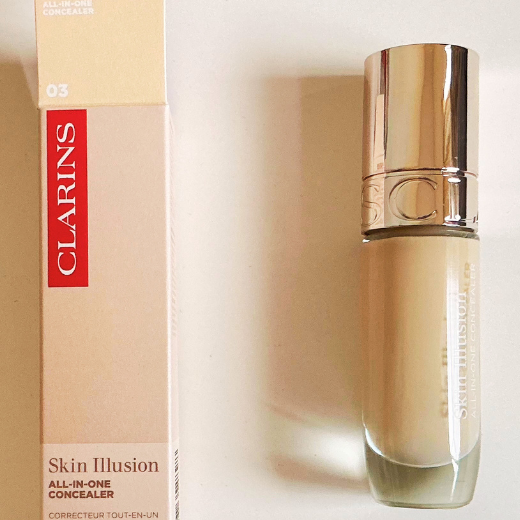
The Joli Rouge Shine lipstick (left) utilizes a recycled metal casing built for lifelong circular refills. The Clarins Skin Illusion All-In-One Concealer (right) swaps out disposable plastic for infinitely recyclable glass and recycled plastic cap.
This high-end execution is what ultimately drives user adoption for circular concepts like refillables. The redesigned Joli Rouge Shine lipstick serves as a gold-standard example. While consumers frequently resist sustainable alternatives due to flimsy components and design, the permanent Joli Rouge outer casing utilizes aluminum integrated with recycled plastics. The result is a beautifully weighted casing that transforms the packaging into more of a keepsake rather than a disposable container–the ultimate incentive to adopt a circular routine.
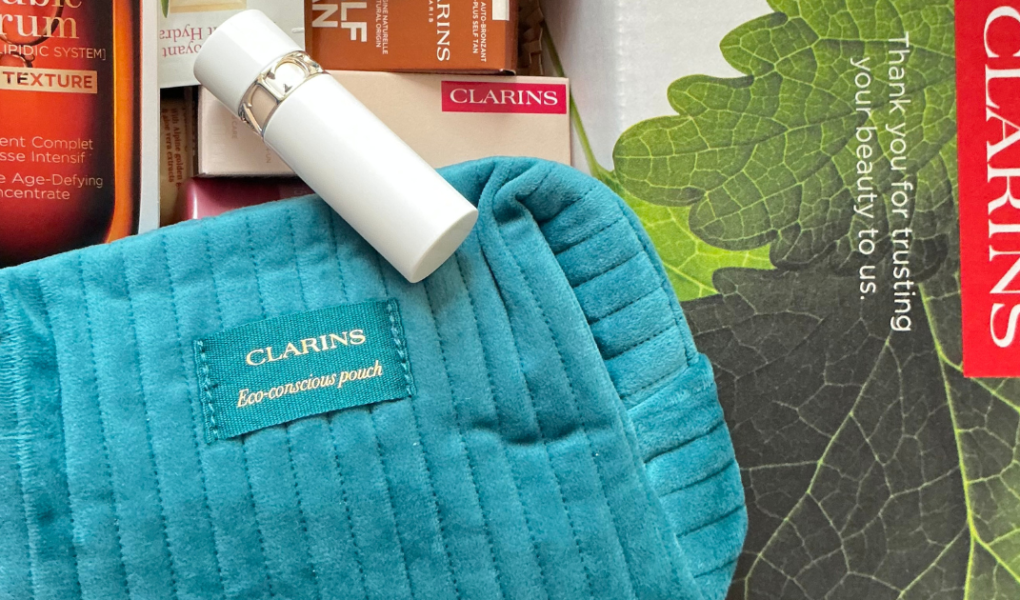
This thoughtful design continues into their promotional choices. The velvety “eco-conscious pouch”–available in a few different colors– is made from recycled materials. It is an aesthetically refined, high-quality accessory that users will actually want to keep and reuse rather than discard, proving that gift-with-purchase packaging can feel elevated and thoughtful.
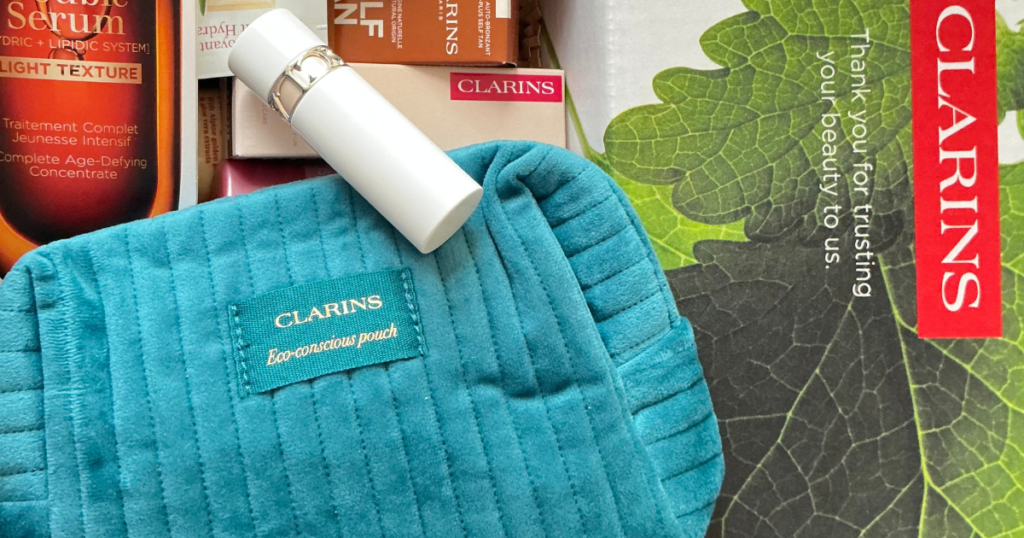
The Clarins “eco-conscious pouch”, showcasing the brand’s integration of recycled textiles into its premium branded packaging.