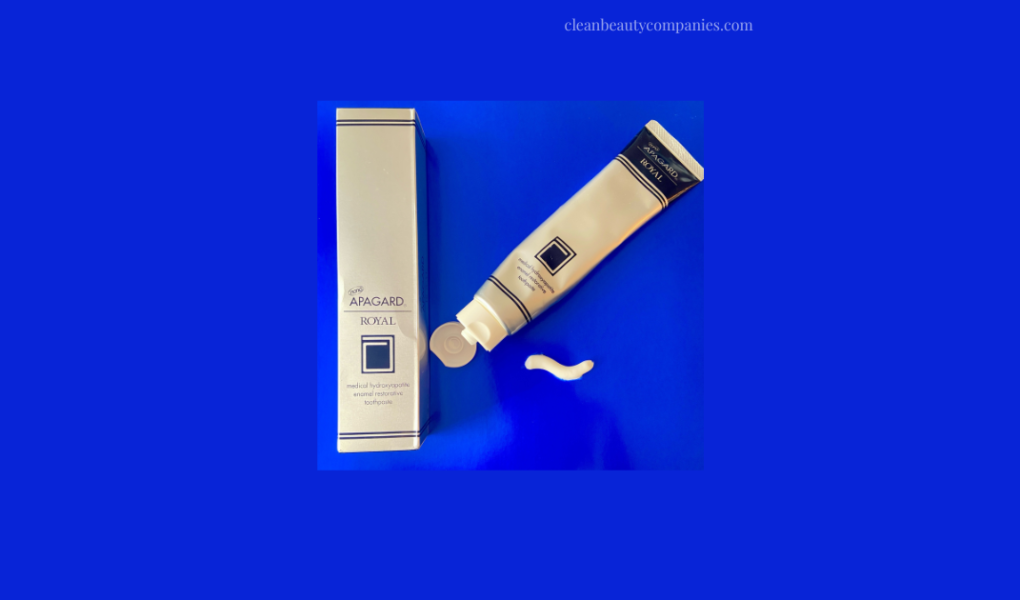
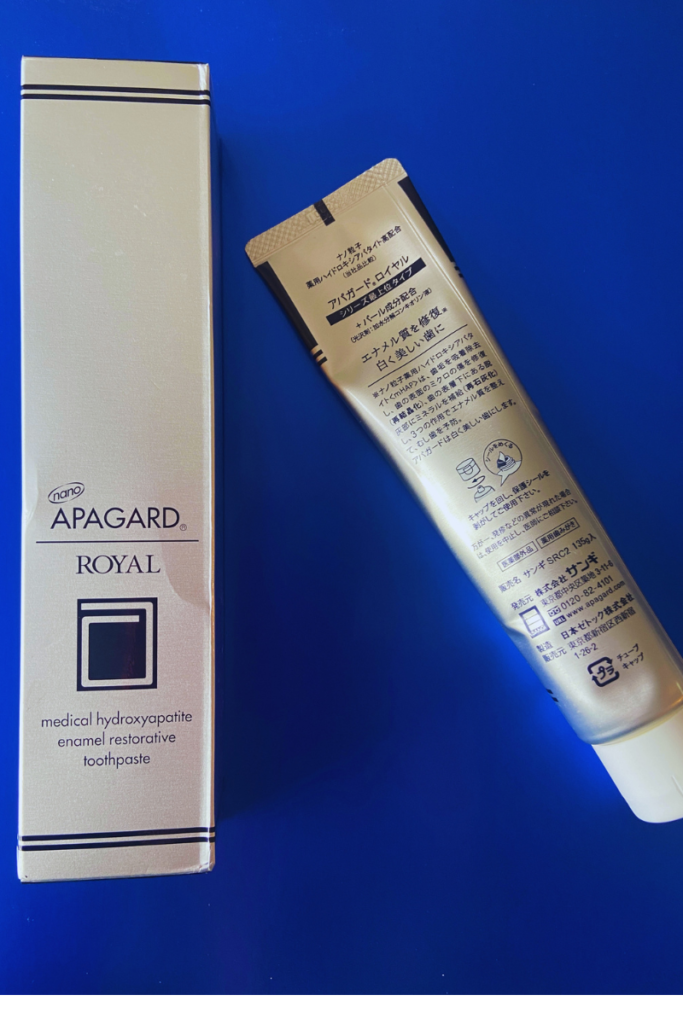
When I spent over $35 to order a single tube of Apagard Royal toothpaste on Amazon, I knew I was testing a product with a massive internet reputation. For anyone scrolling through wellness subreddits or TikTok, this imported Japanese tube is often spoken of in hushed, reverent tones. It is expensive, difficult to track down locally, and promises something regular toothpaste doesn’t: enamel restoration without fluoride.
The NASA Connection and the Global Split
If you browse the oral care aisle of major retailers, you will likely see domestic brands like Lumineux showcasing a “NASA-inspired” origin story on their boxes.
This isn’t clever copywriting, it is verified scientific history. In 1970, NASA patented a synthesis method for hydroxyapatite crystals to help astronauts regenerate bone and teeth density lost during extended zero-gravity missions. That same mineral however took two different paths across the globe:
- The Japanese Legacy: In the late 1970s, the Japanese firm Sangi acquired NASA’s early patent. They spent decades conducting clinical trials to refine the mineral into a proprietary, bio-identical molecule named Medical Hydroxyapatite. By 1993, the Japanese government officially sanctioned it as an effective anti-cavity agent.
- Domestic brands like Lumineux utilize standard nano-hydroxyapatite (n-HAp) supplied by bulk ingredient manufacturers. While highly effective at managing surface sensitivity, they operate as broad mass-market lines—easily picked up on Amazon or during a routine trip to major outlets like Target, Walmart, or Walgreens. They lack the hyper-specific clinical processing and heritage backing Japan’s original formulation.
The Micro-Science: mHAP vs. Generic Bulk Minerals
Why does Apagard Royal command its luxury import price tag compared to mass-market alternatives. As it turns out, the answer lies entirely in particle consistency and formulation threshold.
The 10% Clinical Remineralization Threshold. Independent dental research demonstrates that a 10% concentration of nano-hydroxyapatitte is the biological tipping point required to actively reverse sub-surface demineralization (the phase right before an actual cavity forms). While many standard toothpastes hover at lower, cosmetic-grade baseline doses, Apagard Royal features the highest concentration of specialized in Sangi’s entire line–exactly hitting that clinical remineralization threshold.
While standard toothpastes rely on abrasive materials like silica to scrub the teeth clean, Sangi’s precision-engineered nanoparticles structurally interact with your biology across three phases:
Biofilm Adsorption: The particles carry a specific surface charge that binds tightly to oral plaque bacteria, lifting them off the enamel structure so they easily flush away during rinsing.
Micro-Fissure Repair: The nano-crystals physically bridge and crystallize inside the microscopic scratches and abrasions across your tooth surface, restoring structural smoothness.
Tubule Occlusion: By perfectly filling exposed dentin tubules, the cream effectively blocks external thermal triggers, mitigating structural nerve sensitivity at its core source.
Pearl Liquid Enhancement
To elevate the brightening profile without utilizing corrosive bleaching agentts, the Royal formula introduces hydrolyzed conchiolin liquid–a natural protein extract harvested from Japanese Akoya oysters. Sangi’s clinical metrics indicate this addition generates a 26% boost in tooth surface gloss by smoothing the enamel plane to optimize natural light reflection rather than scraping your teeth with chemical abrasives.
Is Apagard Royal vegan?
While Sangi Co Ltd pioneered the synthetic, lab-made manufacturing process for hydroxyapatite the formula avoids fluoride and harsh abrasives, it does include hydrolyzed conchiolin protein, which is extracted directly from Akoya pearl oyster shells to boost enamel shine. Because it uses animal-derived pearl byproducts it does not meet vegan standards.
| Feature | Apagard Royal | Lumineux Performance Whitening |
|---|---|---|
| Price | $30+ (Import luxury) | $7 – $12 (Mass market) |
| Active Technology | 10% Medical Hydroxyapatite (mHAP) | Standard Nano-Hydroxyapatite (n-HAp) |
| Vegan Status | Non-Vegan (Contains oyster shell protein) | 100% Certified Vegan (VegeCert certified) |
| Availability | Amazon import only (Japanese domestic market) | Target, Walmart, Walgreens, Amazon |
| Primary Benefit | Clinical-grade deep enamel remineralization | Surface sensitivity defense and stain removal |
The FDA Loophole: Why You Have to Turn to Amazon
If this space-age technology is so biologically sound, why isn’t it replacing every tube of toothpaste on US pharmacy shelves? The barrier is the FDA rules. In the U.S. if any oral care brand wants to legally label its product as an “anti-cavity treatment” or “enamel restorer,” the FDA dictates that the formula must contain a regulated dose of fluoride. Because hydroxyapatite works via an entirely different, fluoride-free mineral path, the FDA classifies it strictly as a “cosmetic whitening alternative” rather than an over-the-counter therapeutic drug.
Domestic brands like Lumineux easily conform to this cosmetic classification by focusing their retail packaging on non-toxic whitening benefits, allowing them to scale across mass-market pharmacy and grocery shelves nationwide. Meanwhile, premium medical brands like Apagard choose to remain pure import luxuries, avoiding millions of dollars in redundant domestic drug trials.
Because of this regulatory red tape, I had to purchase my tube of Apagard Royal directly off Amazon as an import.
A major word of warning for fellow enthusiasts looking to do the same: Amazon’s commingled inventory system means counterfeit products may be an issue. When buying Apagard Royal on Amazon, never buy from unvetted third-party sellers, always check the “sold by” field on the listing to ensure it is either shipped directly from Amazon or from a highly rated, authorized Japanese exporter.
The Final Verdict: Is Apagard Royal Worth It?
Because true enamel remineralization takes time to manifest clinically, it is too early for me to give a definitive dental verdict on whether Apagard Royal completely transforms long-term tooth density. However, after analyzing the formulation chemistry and tracking my initial usage, the answer to whether it is worth its approximately $35 import price tag depends entirely on your personal oral care goals:
- It IS worth it if: You are dealing with severe structural tooth sensitivity, translucent edges, or early demineralization, and you want an ultra-high concentration (10%) of genuine, bio-identical medical hydroxyapatite without relying on fluoride. If you value a forty-year clinical legacy over mass-market marketing claims, the investment makes mathematical sense.
- It IS NOT worth it if: You maintain a strictly vegan lifestyle, or if you are simply looking for a basic, accessible clean toothpaste to clear surface stains. For casual everyday routines, certified plant-based domestic options like Lumineux provide an easily obtainable, cost-effective alternative right on your local pharmacy shelf.