While it remains a somewhat overlooked headline in the West, many people are not aware of the toxic haze crisis currently unfolding across Southeast Asia. Driven my a combination of factors–drought and deliberate agricultural land clearing, a massive transboundary toxic haze crisis is impacting millions, closing schools, and triggering emergency room visits. It has officially been called the region’s worst smoke crisis since 2015, raising alarms for global health and environmental stability.
When toxic haze blankets the region, humans suffer the immediate brunt of it, inhaling particles that trigger acute respiratory illnesses. At the same time, pushed-to-the-brink-wildlife, like the critically endangered orangutan lose their forest homes to the agricultural burns. Caring about this crisis means recognizing that human health and animal welfare are intertwined, we cannot protect one without saving the other.
What does the beauty supply chain have to do with it? While it is true that the beauty industry (including personal care products) uses a much smaller fraction of palm oil compared to massive global food or biofuel sectors, cosmetics and everyday personal care items are still deeply bound to this crisis. Roughly 70% of all beauty, skincare, and personal care products rely on palm-derived ingredients to give them their textures, consistencies, and lathers. This is exactly where the core ethos of clean beauty comes into play. At its heart, clean beauty isn’t just about using safe ingredients–it is fundamentally about transparency. It means lifting the veil on complex, opaque supply chains so consumers know exactly where their products come from, how they were made, and who (or what) was harmed in the process.
Why the Burning is Still Going On
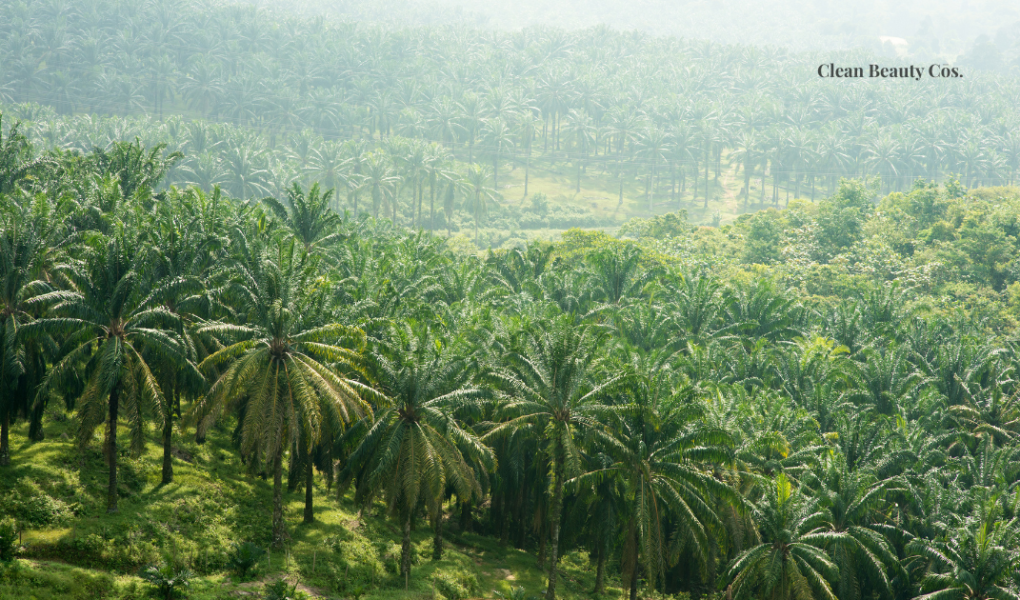
It seems the transboundary toxic haze crisis continues to return because cheap, illegal slash-and-burn agriculture remains the fastest way for local actors to clear dense tropical brush and prepare the land for new crops. this process drives the rapid destruction of rainforests, replacing diverse ecosystems with monoculture plantations.
The problem is deeply economic. Millions of independent, rural smallholder farmers manage a significant share of thet land. These farmers lack the expensive heavy machinery required to clear roots and stumps mechanically, leaving fire as their only affordable option. Under ordinary conditions, these controlled fires stay relatively small.
El Niño also acts as a climate amplifier. It locks extreme drought and high temperatures into the region, baking the landscape. When agricultural burns are set on dried-out, carbon-rich peatlands, the soil itself catches fire underground. These underground peat fires can smolder out of control for months, releasing the massive volumes of smoke currently impacting the region.
That said, El Niño does not light the fires. The burning is deliberate. The resulting toxic haze blankets multiple countries, heavily impacting:
- Indonesia (primary source of the burns)
- Malaysia
- Singapore
- Southern Thailand
- The Philippines
The Question of Accountability
The economic explanation, however, is only part of the story. Fires repeatedly occur inside the same commercial concessions, yet enforcement tends to stop at the individual arsonist rather than those who control the land and profit from it. Indonesia recorded over 200,000 hectares burned between January and July 2026, with 72 arrests — mostly smallholders. Among the concessions under investigation are plantations linked to Malaysian, Singaporean and Japanese firms, some with fire records dating back to 2006, 2015 and 2023, yet still holding valid licenses.
BlackRock has also drawn scrutiny. Environmental coalitions like Friends of the Earth and Global Witness highlight BlackRock because its multi-billion-dollar investments supply the liquidity required for palm oil groups to maintain, purchase, and expand their concessions.
Beauty Brands Are NOT Setting the Fires
It is important to clarify an often confused point: beauty and skincare brands are not the ones lighting these fires. Cosmetic conglomerates do not own or manage the burning plots of land. Instead, they sit at the very end of a long, highly fragmented global supply chain.
A single bottle of lotion might buy its raw ingredients from a global chemical distributor, who bought it from a large-scale processor, who mixed raw fruits together from hundreds of independent farms. Because of this structural distance, brands are often entirely unaware if an untraceable supplier in their network is breaking local laws and clearing land with fire
To bridge this gap, the industry relies on Sustainable Palm Oil Pact frameworks and the Roundtable on sustainable Pam Oil (RSPO). These coalitions act as a bridge between global &Western brands and local producers, requiring transparency onto the supply chain. While many major brands lean heavily into these networks, under the ‘mass balance’ system, sustainable oil and non-sustainable oil may be blended together during transit at centralized processing mills. While the exact oil in a consumer bottle might not be 100% sustainable, the pact ensures that the overall volume of sustainable oil purchased matches what is produced. this ensures that brands are financially funding responsible, fire-free farmers.
Hidden Palm Derivatives
Because palm oil is heavily processed before entering consumer products, it is rarely listed openly on a label. Instead, it is masked under dozens of names. Look for the following:
- Glycerin (or Glycerol) — Found in soaps, moisturizers, and toothpastes
- Cetearyl Alcohol/Cetyl Alcohol — Used as a thickener in hair conditioners and lotions.
- Stearic Acid/Palmitic Acid — Common in shaving creams and face washes.
- Sodium Laureth Sulfate (SLES)/Sodium Lauryl Sulfate (SLS) — The foaming agent in shampoos and body washes.
- Isopropyl Palmitate/Octyl Palmitate — Used to make skin feel smooth.
- Polysorbates (e.g., Polysorbate-20,-60) — Emulsifiers that blend oil and water.
Why a Total Boycott is the Wrong Answer
Despite these supply chain issues, total palm oil boycotts are strongly discouraged by major conservation organizations like the World Wildlife Fund (WWF). palm oil is an incredibly efficient crop, producing up to 4 to 10 times more oil per acre than alternatives like coconut, soy, or sunflower.
If the global market completely boycotts palm oil, brands will be forced to switch to these alternative crops. this would require up to 10 times more agricultural land, causing a wave of global deforestation elsewhere. Furthermore, millions of smallholder families rely entirely on palm oil for their basic survival. Stripping away their market would only deepen economic desperation.
Lab-Grown Alternatives: A Delicate Balance
Conservation groups emphasize that lab-grown tech shouldn’t completely replace traditional farming overnight. Instead, the ultimate goal is a two-pronged approach: using biotech to cap the expansion of new plantations while continuing to buy certified sustainable oil to support rural farming communities.
This new frontier of lab-grown alternatives offers transparency. Brewing a sustainable palm oil alternative inside laboratory fermentation tanks. Companies like C16 Bioscience, headquartered in New York City, are making waves. Founded in 2017-2018, the team met at MIT and launched a mission to use technology to solve global deforestation. Backed by Bill Gates’s Breakthrough Energy Ventures, they created Palmless, a platform utilizing precision fermentation, the same commercial process used to brew beer or make cheese. By feeding specific strains of natural yeast or fungi upcycled agricultural waste or natural sugars, they can brew a rich oil called Torula Oil. It is structurally almost identical to palm oil.
As mentioned, some conservation groups are concerned that synthetic biology-based companies could exploit the genetic resources of non-Western countries by producing synthetic versions of natural products. As addressed by nongmoproject.org and others, this could increase global inequality.
The Road Ahead
The fires may be set locally, but the haze produced does not respect borders. As the region confronts another season of burning, the challenge remains the same: balancing agricultural livelihoods and economic pressure against the health of millions and the survival of endangered species. Until that balance is found, Southeast Asia’s skies—and the people and wildlife beneath them—will continue to bear the cost.