High-End Serums vs. Whole Foods: Saving Your Skin and Your Wallet
While a luxurious skincare routine offers a lovely sensory experience, true cellular transformation comes from the inside out. Slathering on expensive topicals can feel wonderfully indulgent, but for real, structural results, the ultimate beauty hack might actually be found in the produce aisle. By skipping the steep price tags of premium skincare bottles and focusing on nutrient-dense whole foods like kiwifruit, you can unlock a budget-friendly glow that delivers a level of efficacy synthetic products struggle to match.
The Biological Advantage: Why Your Cells Prefer Fruit Over Fluids
Dietary vitamin C outperforms topical vitamin C serums because it enters the bloodstream directly via internal transporters, whereas water-soluble topical formulas struggle to penetrate the skin’s oily barrier and oxidize quickly upon exposure to air. Furthermore, whole foods provide a natural matrix of enzymes and antioxidants that enhance nutrient absorption compared to synthetic vitamin C fluids.
| Feature | 🥝 Eating 2 Kiwis a Day (Internal) | 🧪 Topical Vitamin C Serum (External) |
|---|---|---|
| Delivery Method | Carried via the bloodstream directly to the deep dermal and epidermal layers. | Absorbed directly through the surface barrier of the skin. |
| Penetration | 100% efficient. Easily bypasses the skin’s protective outer barrier from the inside. | Difficult. Serums require exact pH levels and specific formulations (like L-ascorbic acid) to penetrate. |
| Skin Benefits | Boosts deep structural density (up to 50%), accelerates cell renewal, and improves overall skin barrier health. | Targets surface issues like fading dark spots, brightening skin tone, and neutralizing immediate UV damage. |
| Stability & Cost | Stable, affordable whole food packed with complementary nutrients like Vitamin E and potassium. | Highly unstable (oxidizes quickly when exposed to air/light) and often expensive. |
Fun Fact: From “Monkey Peach” to Global Beauty Secret
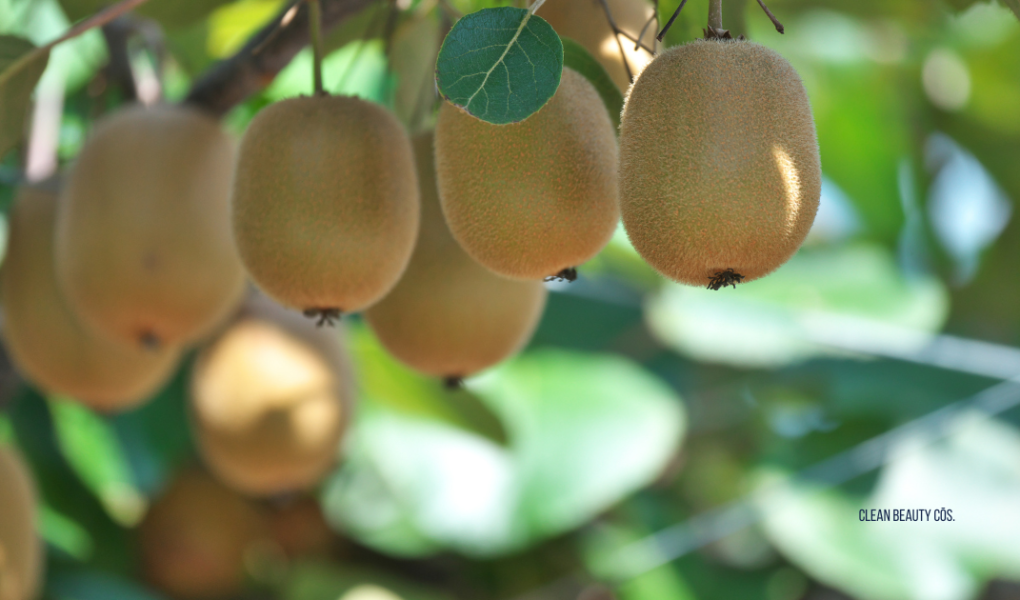
The kiwi didn’t originate in New Zealand–it is actually native to China’s Yangtze River valley, where it has been loved for centuries as the 猕猴桃 (míhóutáo, “monkey peach), named because wild macaques love eating them in the mountains.
In 1904, a New Zealand school principal, Isabel Fraser, brought a handful of the seeds back home. Because the fuzzy fruit tasted a bit like a gooseberry, locals dubbed it the “Chinese gooseberry.” It wasn’t until 1959 that clever exporters rebranded the fruit as a “kiwifruit” after New Zealand’s famous, fuzzy national bird.
While topical serums certainly have their place for a touch of surface protection and sensory pampering, science proves that your skin thrives best when it is fed from within. By simply adding two kiwis to your daily routine (or any equivalent vitamin-C-rich fruit), you are choosing a stable, natural, and remarkably budget-friendly beauty strategy that builds long-term skin density and cell health.